
How to Start a Small Business in 2026: A Beginner’s Guide

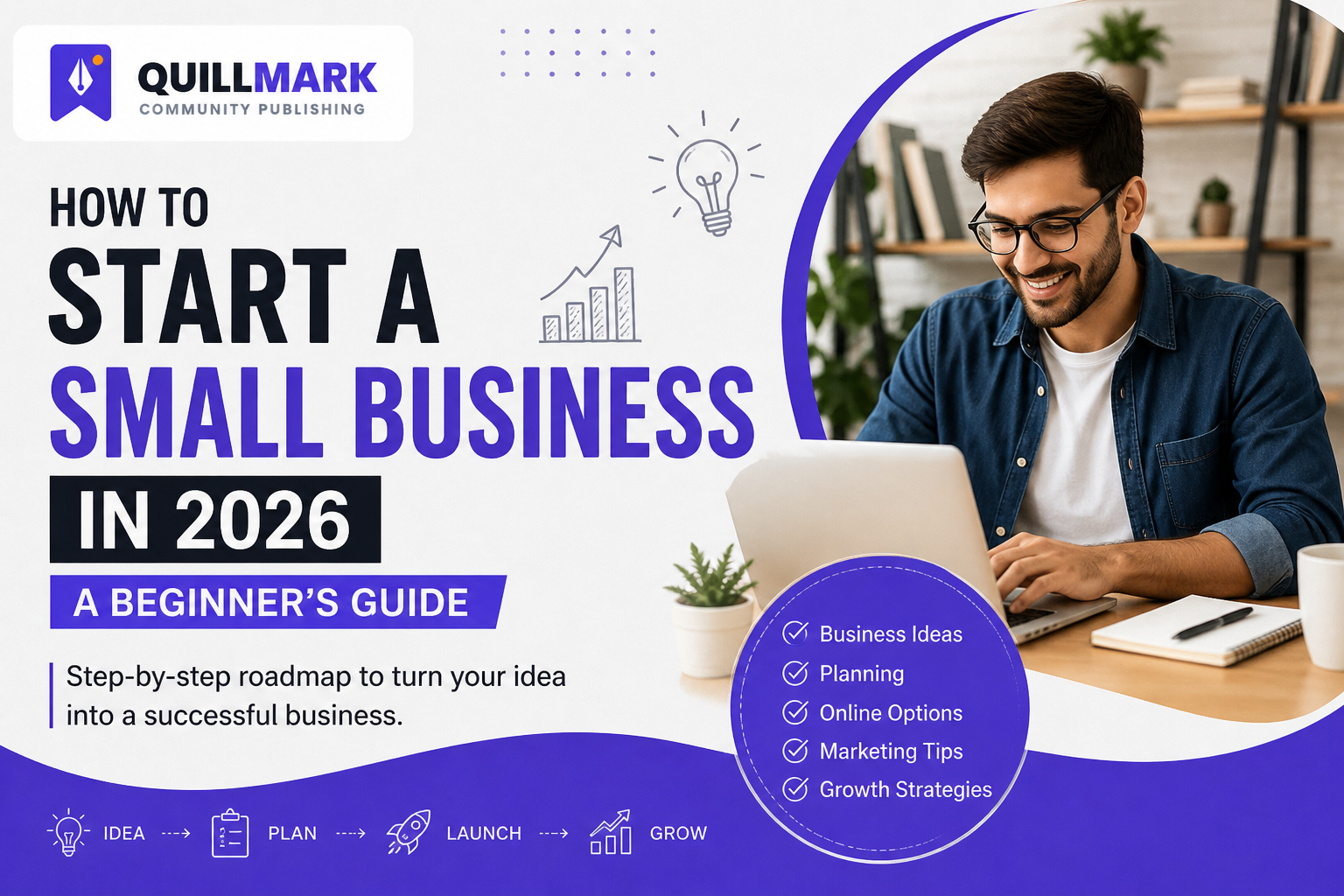
Starting a small business can be an exciting way to turn your skills, knowledge, or ideas into a source of income. With the growth of online platforms, digital payments, social media, and remote services, entrepreneurs no longer need a large office or significant investment to get started.
Whether you want to sell products, offer professional services, work as a freelancer, or build an online brand, there are many ways to begin with limited resources.
But having an idea is only the first step. A successful business requires planning, understanding your customers, choosing the right business model, managing money carefully, and consistently improving your offer.
This guide explains how to start a small business from the ground up, including practical ideas for beginners, students, freelancers, and people who want to start from home.
What Is a Small Business?
A small business is an independently owned business that operates on a relatively small scale. It can be run by one person, a small team, or a family.
Small businesses can operate in almost any industry, including:
- Digital marketing
- Freelancing
- E-commerce
- Consulting
- Home-based services
- Food and catering
- Graphic design
- Web development
- Content creation
- Education and tutoring
- Local professional services
One of the biggest advantages of a small business is flexibility. You can start with a simple business model and expand as you gain customers and experience.
How Do You Start a Small Business?
If you are wondering how do you start a small business, the process becomes much easier when you break it into manageable steps.
You don’t need to have everything perfect before starting. Instead, focus on validating your idea, understanding your target customer, and building a simple system that can generate revenue.
Here are the key steps.
1. Identify a Business Idea
The first step is finding a business idea that solves a real problem or provides something people are willing to pay for.
Start by asking yourself:
- What skills do I have?
- What problems can I solve?
- What products or services do people need?
- What industries do I understand?
- What can I realistically start with my current budget?
- Can I operate the business online or from home?
Your idea doesn’t necessarily have to be completely new. Many successful businesses improve an existing product or service by offering better quality, convenience, pricing, specialization, or customer experience.
Small Business Ideas for Beginners
Some practical small business ideas include:
- Freelance writing
- SEO services
- Graphic design
- Website development
- Social media management
- Online tutoring
- Virtual assistance
- Handmade products
- Print-on-demand products
- Home-based catering
- Photography
- Consulting
- Cleaning services
- Digital products
- Online coaching
The best option depends on your skills, available resources, market demand, and willingness to learn.
2. Research Your Target Market
Before investing money, understand who your potential customers are.
A common mistake beginners make is creating a product first and searching for customers later. A better approach is to identify a specific audience and understand its problems.
For example, instead of saying:
“I want to provide marketing services.”
You could define your market more specifically:
“I help local restaurants improve their online visibility through SEO and content marketing.”
A specific audience makes it easier to create your offer, pricing, marketing message, and promotional strategy.
Research competitors as well. Look at their services, pricing, customer reviews, website content, social media presence, and weaknesses.
The objective isn’t to copy them. It is to understand the market and identify opportunities to differentiate yourself.
3. Decide Whether to Start Online, From Home, or Locally
One of the biggest decisions for a new entrepreneur is choosing the right operating model.
Today, many entrepreneurs can start without renting commercial space.
How to Start a Small Business Online
If you are wondering how to start a small business online, begin by choosing a business model that can operate digitally.
Examples include:
- Freelancing
- Online consulting
- E-commerce
- Digital marketing
- Affiliate marketing
- Online tutoring
- Content creation
- Digital products
- Software or web services
You may need a website, professional email address, social media profiles, payment solution, and a reliable way to communicate with customers.
You don’t need to build a complicated website on day one. A simple, professional online presence that clearly explains what you offer can be enough to begin testing your idea.
How to Start a Small Business at Home
Learning how to start a small business at home can be especially useful if your budget is limited.
Home-based businesses can include:
- Baking and food preparation
- Freelancing
- Online tutoring
- Digital marketing
- Graphic design
- Handmade products
- Clothing or customized products
- Consulting
- Virtual assistance
- Content creation
Before operating a home-based business, check the local rules, licensing requirements, taxes, and any restrictions that may apply to your type of business.
The key advantage is that you can reduce initial overhead costs while testing whether there is genuine demand.
4. Start With a Simple Business Model
You don’t need a complicated business structure when you’re starting.
Your business model should answer four basic questions:
What are you selling?
Clearly define your product or service.
Who are you selling to?
Identify your target customer.
Why should they choose you?
Explain your unique value.
How will you make money?
Decide whether customers will pay per project, per product, through subscriptions, commissions, packages, or another model.
For example, a freelance designer might offer:
- Logo design
- Social media graphics
- Brand identity packages
Instead of offering everything to everyone, starting with a focused service can make your business easier to market.
5. Consider Freelancing as a Starting Point
Freelancing can be one of the simplest ways to test your skills and learn how online businesses work.
If you are interested in how to start freelancing online, begin by selecting one marketable skill.
Examples include:
- Writing
- SEO
- Graphic design
- Video editing
- Web development
- Data entry
- Social media management
- Virtual assistance
Create a small portfolio demonstrating what you can do. If you don’t have previous clients, create sample projects that demonstrate your abilities.
Then create professional profiles on relevant freelance marketplaces or use LinkedIn, your website, networking, and direct outreach to find potential clients.
Don’t focus only on getting as many clients as possible. Your early objective should be learning how to communicate with clients, understand requirements, meet deadlines, deliver quality work, and collect testimonials.
6. Students Can Start With Low-Cost Business Ideas
Students often have limited money and time, but they can still experiment with entrepreneurship.
There are many best side hustles for students that don’t require a large initial investment.
Some options include:
- Freelance writing
- Graphic design
- Video editing
- Tutoring
- Social media management
- Website services
- Selling digital products
- Photography
- Content creation
- Affiliate marketing
The advantage of a student side hustle is that it can be started gradually.
For example, a student interested in graphic design could spend a few hours each week creating sample designs, building a portfolio, and contacting potential customers.
The goal shouldn’t necessarily be to build a large company immediately. Developing a useful skill and learning how to sell that skill can be valuable long-term.
7. Calculate Your Startup Costs
Before spending money, create a simple startup budget.
Your expenses might include:
- Domain and website
- Business software
- Equipment
- Packaging
- Marketing
- Professional services
- Inventory
- Payment processing
- Licenses or registrations
- Transportation
Separate essential expenses from optional ones.
For example, a service-based freelancer may only need a computer, internet connection, portfolio, and basic software to begin.
A product-based business may require inventory, packaging, storage, shipping, and other expenses.
Starting lean reduces financial pressure and allows you to learn before making larger investments.
8. Validate Your Business Idea
One of the most important steps when learning how to start up a small business is validating your idea.
Validation means testing whether real people are interested in your product or service.
You can validate an idea by:
- Speaking with potential customers
- Offering a small pilot service
- Creating a landing page
- Publishing useful content
- Running a small promotional campaign
- Asking for feedback
- Taking pre-orders where appropriate
- Testing different offers
Don’t rely entirely on friends and family for validation. Their feedback can be useful, but actual customers provide stronger evidence of market demand.
If people aren’t interested, don’t immediately assume the entire business idea is bad. You may need to adjust the audience, pricing, positioning, or offer.
9. Build Your Online Presence
A professional online presence can make a small business easier to discover and trust.
Depending on your business, this may include:
- A website
- Google Business Profile
- LinkedIn profile
- Instagram page
- Facebook page
- YouTube channel
- Professional email
- Online portfolio
Your website or profile should quickly answer:
- What do you offer?
- Who do you help?
- Why should customers trust you?
- How can they contact you?
Keep your branding consistent across platforms. Use clear descriptions, professional images, customer reviews where available, and useful content.
10. Create a Simple Marketing Strategy
Even a great product can struggle if customers don’t know it exists.
Start with a few marketing channels rather than trying to use every platform.
For example:
Local business: Local SEO + Google Business Profile + reviews
Freelancer: LinkedIn + portfolio + direct outreach
Online store: SEO + social media + email marketing
Consultant: Educational content + networking + referrals
Content marketing can also help build long-term visibility. Publish articles, guides, videos, or social posts that answer questions your potential customers are already asking.
The goal is not simply to promote your business repeatedly. Provide useful information that demonstrates your expertise and builds trust.
11. Focus on Customer Experience
Getting your first customer is important, but keeping customers can be even more valuable.
Respond to messages professionally and clearly. Set realistic expectations. Deliver work on time. Communicate when problems occur.
After completing a project or sale, ask customers for genuine feedback.
Positive customer experiences can lead to:
- Repeat purchases
- Referrals
- Reviews
- Testimonials
- Long-term relationships
Your reputation can become one of your strongest marketing assets.
12. Track Your Business Performance
Once your business starts operating, track the numbers that matter.
Depending on your business, monitor:
- Revenue
- Expenses
- Profit
- Number of customers
- Leads
- Conversion rate
- Repeat customers
- Marketing costs
- Customer acquisition cost
Don’t measure success only by revenue. A business generating high sales but spending too much may not be financially healthy.
Review your performance regularly and use the information to make better decisions.
Common Mistakes to Avoid
New entrepreneurs often make avoidable mistakes. Some of the most common include:
Trying to Serve Everyone
A clearly defined audience usually makes marketing and positioning easier.
Spending Too Much Too Early
Avoid unnecessary expenses before you know whether customers want your product or service.
Ignoring Marketing
Building a business without a customer acquisition strategy can make growth difficult.
Copying Competitors
Study competitors, but develop your own value proposition and customer experience.
Expecting Immediate Results
Most businesses require experimentation, consistency, and adjustment before they become stable.
Neglecting Financial Records
Track income and expenses from the beginning so you understand how the business is performing.
Final Thoughts
Learning how to start a small business doesn’t require having a perfect idea, a large investment, or years of business experience. What matters is starting with a clear problem, understanding your target audience, creating a useful offer, and testing it with real customers.
Whether you want to learn how to start a small business online, explore how to start a small business at home, begin freelancing, or test one of many small business ideas, start with a manageable plan.
For students, freelancing and other low-cost side hustles for students can be a practical way to develop valuable skills while earning money. For experienced professionals, a service-based business can provide a pathway to turn existing expertise into an independent venture.
Start small, learn from customers, manage your finances carefully, and improve your business based on real feedback. A sustainable business is usually built step by step—not overnight.

Manishvanshpal
Contributing writer and creator on the Quillmark community publishing platform.
Responses & Discussion (0)